
Linkpost July 2025
Animals, Molecules, Infrastructure, and Choice

Clever Carnivore Plans 2026 Cultivated Pork Launch with Industry-First $0.07/L Media Cost - Green Queen
Clever Carnivore’s culture media cost – which has been at the $0.07 level for two years now – undercuts its competitors.
“Our path to approval should be relatively smooth because the groundwork for evaluation has already been laid” - CEO Virginia Rangos
AI Safety for Fleshy Humans - Nicky Case & Hack Club
(Nicky Case is a she now? wow.)
Putting the “You” in CPU - Lexi Mattick & Hack Club
How does your computer work on the low level?
Anti-TechBio - Ron Boger and Dennis Gong
The Mountain is High, the Lead Investor is Far Away - Rhodium Group
Principle-agent problems! at the chinese local banking office.
Molecular Cause of Death - Dennis Gong
A recent GWAS of genetic variants associated with human height showed that all we needed to understand the missing heritability was more samples.


Seeing like a Bank - Patrick McKensie
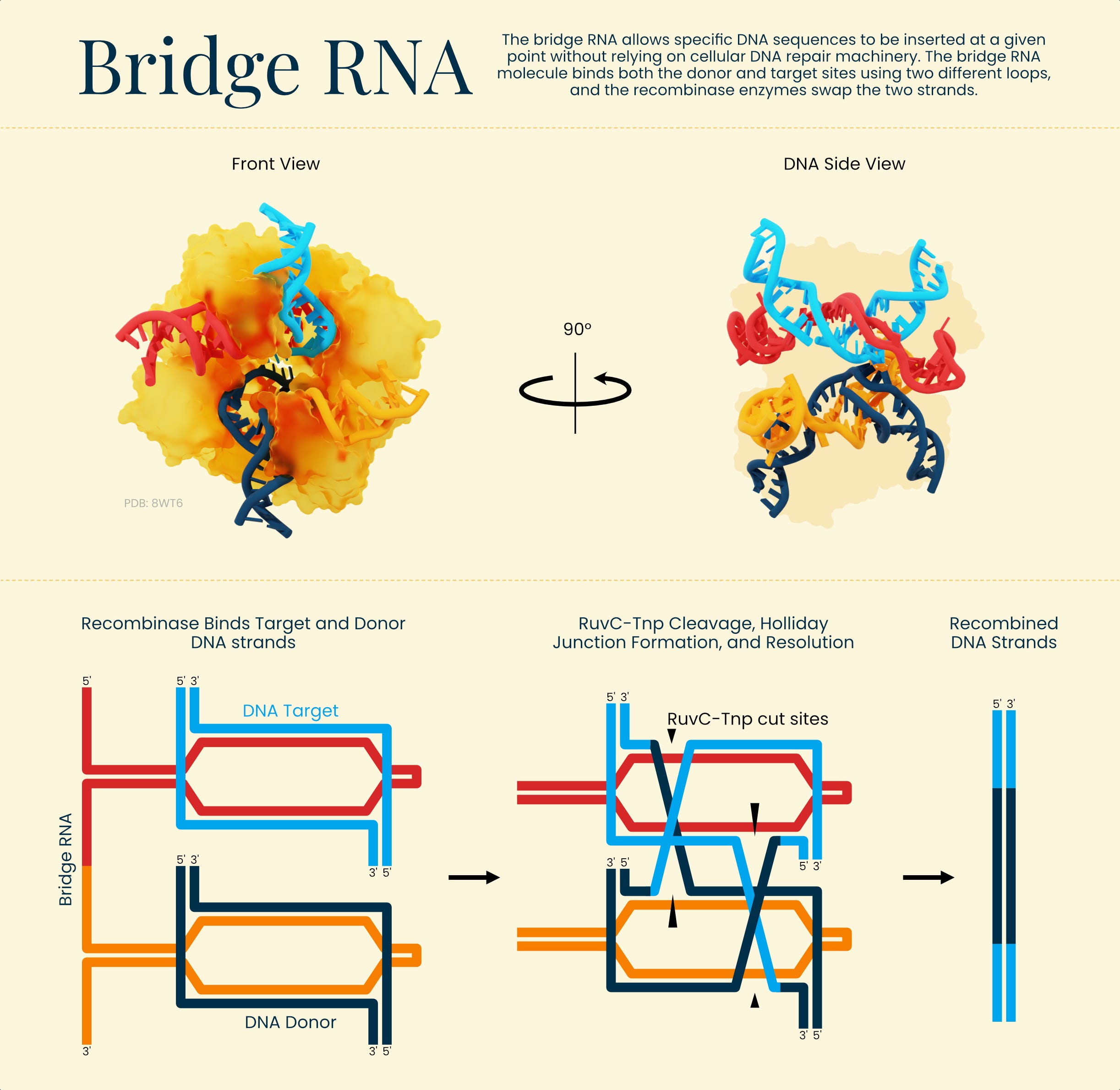
A Visual Guide to Genome Editors - Evan DeTurk, Asimov Press
Progress in in-vitro oogenesis.

Remember Étienne Fortier-Dubois’s Tech Tree? Well, the appeal system is real too. Here’s how it looks for the United States:

Click through to the original embed to interact!
A single-cell journey from mechanistic to descriptive modeling and back again - Hyperparameter Space
computer should be friend - Tess, loginasroot
in a world where everything's computer, computer should be friend. computer should make you feel warm and fuzzy. when you wake up in the morning you should look forward to operating computer. computer should love you, and you should love computer.

What Some Animals Endure Before We Eat Them - Nicholas Kristof, The New York Times

A straightforward blog post introducing all the fundamental ideas about why we offset and how we become good animal advocates - for a counterintuitive, but real, notion of good.

Here's the wild truth that even the most committed vegans don't always consider: offsetting has some comparative advantages over diet change alone. Think about it:
Your impact ceiling is limitless. Go vegan and you spare roughly 255 animals a year. Impressive! But donate enough and you could save 1,000 animals. Or 10,000. There's no upper limit to how much good you can do, if your wallet is willing.
You can make amends for your past. Diet change only helps animals going forward. It can't help the ones already affected by your old cheeseburger habit. Offsetting? It's like moral time travel. You might not be able to literally help the same animals your past self impacted, but you can do the same amount of good today — the next best thing. Even vegans can use this to clean their pre-enlightenment slate.
You're funding systemic change. Individual dietary choices, while admirable, are just that — individual. Donation dollars can fund lobbyists fighting for animal welfare legislation, corporate campaigns pressuring entire industries to change and scientists cooking up real meat in labs so you can enjoy your steak but skip the slaughterhouse. You're not just taking your business elsewhere, you're actively transforming the system.
It's sustainable for most people. Let's be honest: the five-year retention rate for veganism isn't great. Many people try, slip up, and abandon ship entirely. But a set-and-forget monthly donation? That's something most people can stick with for the long haul. And a consistent donor over decades will save more animals than someone who goes vegan for six months then gives up.
Ethics Offsets - Slate Star Codex


Best Essay of July 2025. Optimism, numbers, specific industry structure, it’s all there.
chat.html - full-featured browser llm interface from Mariven
Hedonic News - link aggregator powered by Exa.ai Websets. Made by Mariven

“The Bitter Lesson” but for data. Each advancement is only as good as the quality*quantity of data it unlocks the system to learn from.
This discovered equivalence is really profound because it hints that *there is an upper bound to what we might learn from a given dataset*. All the training tricks and model upgrades in the world won’t get around the cold hard fact that there is only so much you can learn from a given dataset.
If our ideas aren’t new, then what is?
One obvious source of information that a lot of people are working towards harnessing is video. According to a random site on the Web, about 500 hours of video footage are uploaded to YouTube *per minute*. This is a ridiculous amount of data, much more than is available as text on the entire internet. It’s potentially a much richer source of information too as videos contain not just words but the inflection behind them as well as rich information about physics and culture that just can’t be gleaned from text.
See Why Tacit Knowledge is More Important Than Deliberate Practice - Commoncog, also about using information embodied in videos to learn what is not learnable over text.
The flip side of this paradigm is that once we figure out how to learn from embodied data, there would be a straight shot to general physical intelligence (even if not fully robust, like we are not.)