Interesting Links January 2026

Cheap Eurostar - Travel to Amsterdam/Paris for £35
No Silver Bullet - Jason Crawford
So fire safety was achieved through the combination of:
General-purpose technologies: engines, electronic communications, electric light and heat
Specific inventions: fire pumps, fire hose, fire alarms
Infrastructure: municipal water supply, telephone lines
Standards, testing and certification: of electrical products, fire preventing and fire-fighting equipment, building materials, etc.
Law: building codes and other fire safety codes
Education and training: in fire departments, among the public
This is a general pattern. Safety requires:
both prevention and “cure”
both technical and social solutions
among technical solutions, both products and systems
among social solutions, both education and law
So too should this apply to air safety; road safety; biosafety. Everything robust is a defense-in-depth. If you have a policy goal of “preventing bad thing X from happening”, you will want to add layers of protection in different ways that don’t fail together. Social, cultural, legal, technological.
Status as a Service (StaaS) - Eugene Wei
Community building for EA has been on my mind. How networks form and grow is the core problem you try to solve if you do CB. From past reading (and past experience), I tend to look at belonging to a community as a conveyer of status - I’ve been on the grind to get cultural capital this year, and convert it into social capital, so that I can finally get things like a good job, a girlfriend, etc. and feel like I deserve it. And it feels natural to me that yeah, I wasn’t told this, but this is pretty close to how it works.
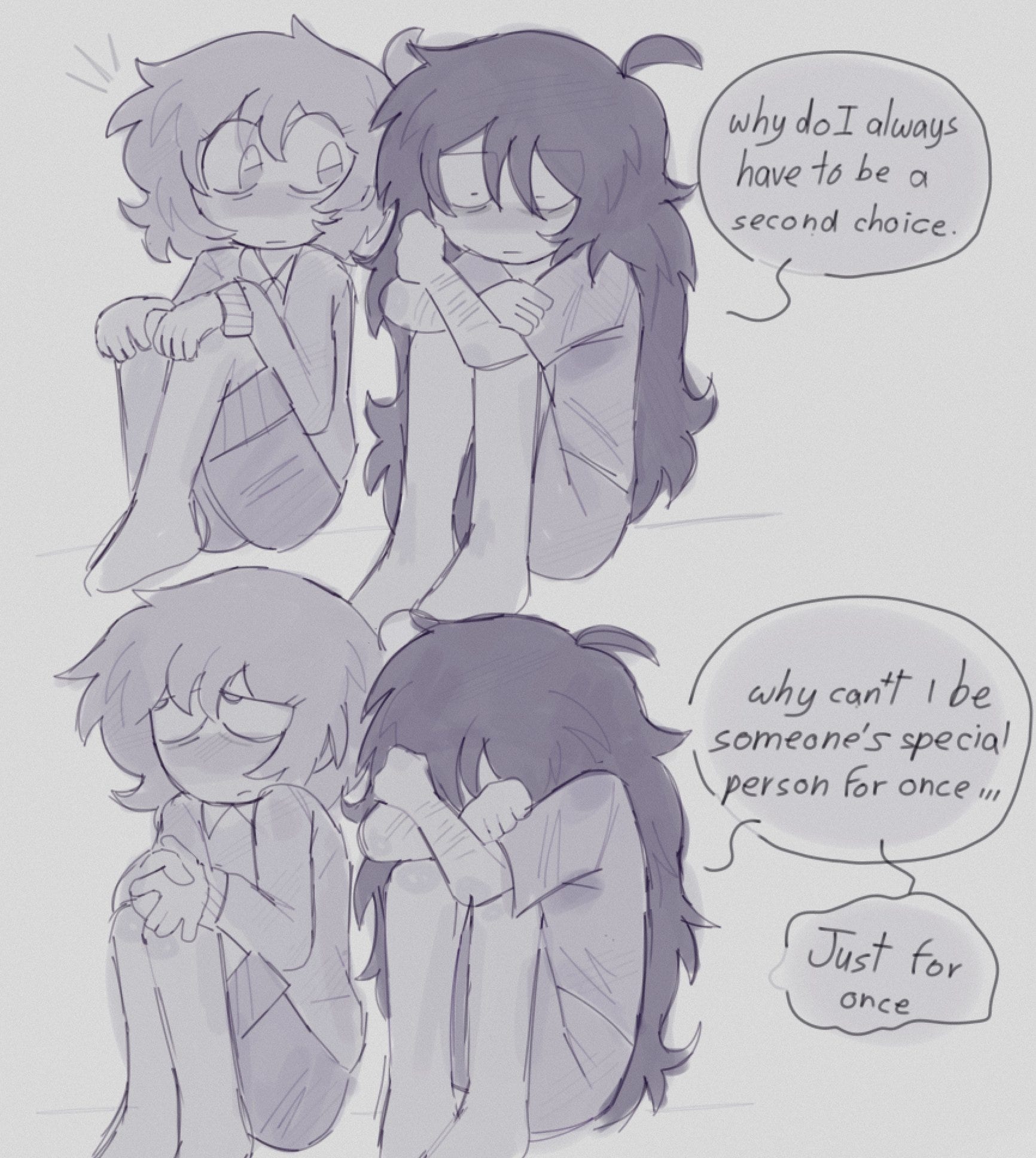
This piece was written in 2019 so it’s probably influenced, through other writers, how I ended up thinking. Looking backwards in time, the ideas were approached from an interesting cosine wrt. where I’d approach it from now. Quotes:
Social capital is, in many ways, a leading indicator of financial capital, and so its nature bears greater scrutiny. Not only is it good investment or business practice, but analyzing social capital dynamics can help to explain all sorts of online behavior that would otherwise seem irrational.
In the past few years, much progress has been made analyzing Software as a Service (SaaS) businesses. Not as much has been made on social networks. Analysis of social networks still strikes me as being like economic growth theory long before Paul Romer’s paper on endogenous technological change. However, we can start to demystify social networks if we also think of them as SaaS businesses, but instead of software, they provide status.
Can I use the social network to accumulate social capital? What forms? How is it measured? And how do I earn that status?
On starting new networks:
This is the classic cold start problem of social. The answer to the traditional chicken-and-egg question is actually answerable: what comes first is a single chicken, and then another chicken, and then another chicken, and so on. The harder version of the question is why the first chicken came and stayed when no other chickens were around, and why the others followed.
Students at top universities pack their days, and prioritise and exploit well, and don’t have free time every week to hang out with new people they don’t know well. I was thinking before reading this that an EA social club offers a way to get better at some (broader) competition - of getting into trading, or ML research jobs, prestige by proximity to an affluent bay tech / academic Oxfordian culture, or of feeling you are a good and rational person. But you can’t compete with Algotrading Society for the first-line attention of people who want to algorithmically trade.
So, to answer an earlier question about how a new social network takes hold, let’s add this: a new Status as a Service business must devise some proof of work that depends on some actual skill to differentiate among users. If it does, then it creates, like an ICO [Initial Coin Offering], some new form of social capital currency of value to those users.
This is not the only way a social network can achieve success. As noted before, you can build a network based around utility or entertainment. However, the addition of status helps us to explain why some networks which seemingly offer little in the way of meaningful utility (is a service that forces you to make only a six second video useful?)[(Is a service that asks you to help people far away, or animals, or both who do not even currently exist)] still achieve traction.
However, broad-based skills I think people can work on together (that EA could be a good RL environment for) are those of writing - including reading and some of the situational awareness that comes with it; betting and making money on your bets; and desk research habits on selected issues. Notably, this may not include mechanistic interperability, engineering research, or biological lab research - few people may ever come in at once with the ability to do these, and the r-value may be close enough to <1 to make it difficult to cold-start this competition without a magically large base population and high proportion selected who can do these things. A possible solution is to make friends among people who can do CS, or wet-lab (iGEM), and are passionate enough to know other people also into their thing (have a tight enough social network from which to pull enough friends to cold-start a positive-sum competition in that skill, as directed to doing good in a numerically efficient manner). I wouldn’t know how to do that though, I don’t even have many good friends.
Is the world actually that vulnerable? - Croissanthology
Looking at existing preparedness against climate, pollution, solar flares, even pandemics: no, it’s not.
The moral of these stories is that civilization is often more resilient than I had assumed. For most tail risks which are too big for markets to insure against, the answer to “what would happen if it came about” is less “oh we are so deeply unprepared it would be a knockout for humanity” and more “yeah we're 30% prepared, and in a pinch we can whip up another 50% via the indomitable human spirit”.
The Adolescence of Technology - Dario Amodei
Speaking of current preparedness against risks of powerful AI, from maybe the top organisation in the field on this issue.
the myth of mechanical engineer ai - em0sh
What needs to happened for AIs to do mechanical engineering? Lesson applies to other engineering disciplines who design and produce physical parts that fit together and do what you want it to, across a large space of “things you want your assembly to do” - mass-produce chemicals, go to space, transmit power, house people or computer infrastructure, etc.
- coding is only text. LLMs are good at this. most of mechanical engineering is multi-modal and messy
- this multi-modal problem is really difficult. even something simple like a single part is really complicated -- it's not even just 3D! you have the application layer instructions (CAD feature history), the BREP (step file, actual 3D), the CAM (here be dragons), the drawing (still lives on paper, even today), etc. one simple task, many modes…
- we haven't even gotten to the "real" engineering like stress analysis, material selection, etcetera. at first, i thought this would be easy because there is a ton of training data on engineering analysis, but i've realized recently so much of engineering analysis is experience and not knowledge. i rely on my eyecrometer more than my calculator
Most of these multi-modal tasks will probably be solved by a mix of general model capabilities and specialised training for it. Because of the connection between parts’ physical details and engineering performance, robotics will probably have to be solved before we get AIs which can engineer 90% of things from end to end. Until then, experienced humans will be necessary in the loop. But for how long? 5 years, 10 years, 25 for the hardest cases?
Going Founder Mode On Cancer - Elliot Hershberg
The founder of GitLab, Sid Sijbrandij, in 2022, was diagnosed with bone cancer, osteosarcoma. He went through the standard of care, but in 2024, he reached the end of it and the osteosarcoma was not fixed. What do you do at this point?
Over the last two years, Sid has assembled a veritable SWAT team to navigate—and in many cases create—his care journey.
Many of the ingredients resemble GitLab.
Sid developed a complex information management system (his care notes) to manage streams of complex information (his diagnostics) that guide the use and creation of complex information products (drugs).
Cancer is a disease of information. Loss of genomic information threatens to destroy the self. It may have met its match with Sid.
He used consultations with experts, as many diagnostics as he was able to do at every interval, and repurposed and individual therapies - because those are the options in at the end of the standard of care flow chart.
So far, using the Individual Patient Expanded Access - Investigational New Drug Application (IND), known as Form 3926, Sid has gained access to five experimental medicines where no trial would have otherwise been available to him. In each case, the FDA has accepted his application within 48 hours. “The FDA wants me to live,” Sid says.2
Surprisingly, hospital institutional review boards (IRBs) have been more challenging to navigate than the FDA.
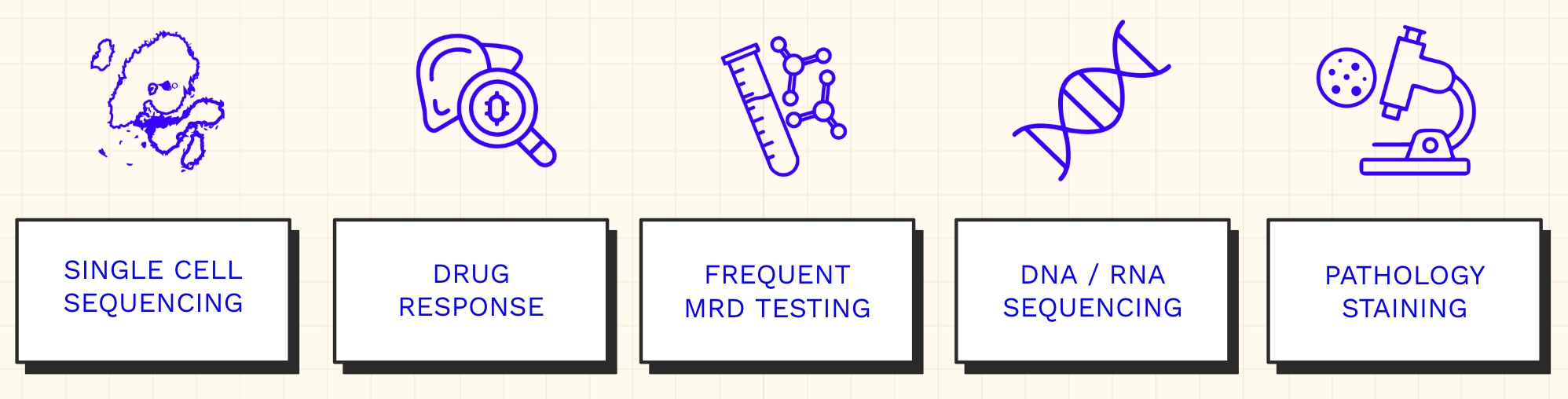
In the spirit of GitLab, you can see everything about his treatment, open-source.
The BBN Fund - Eric Gilliam
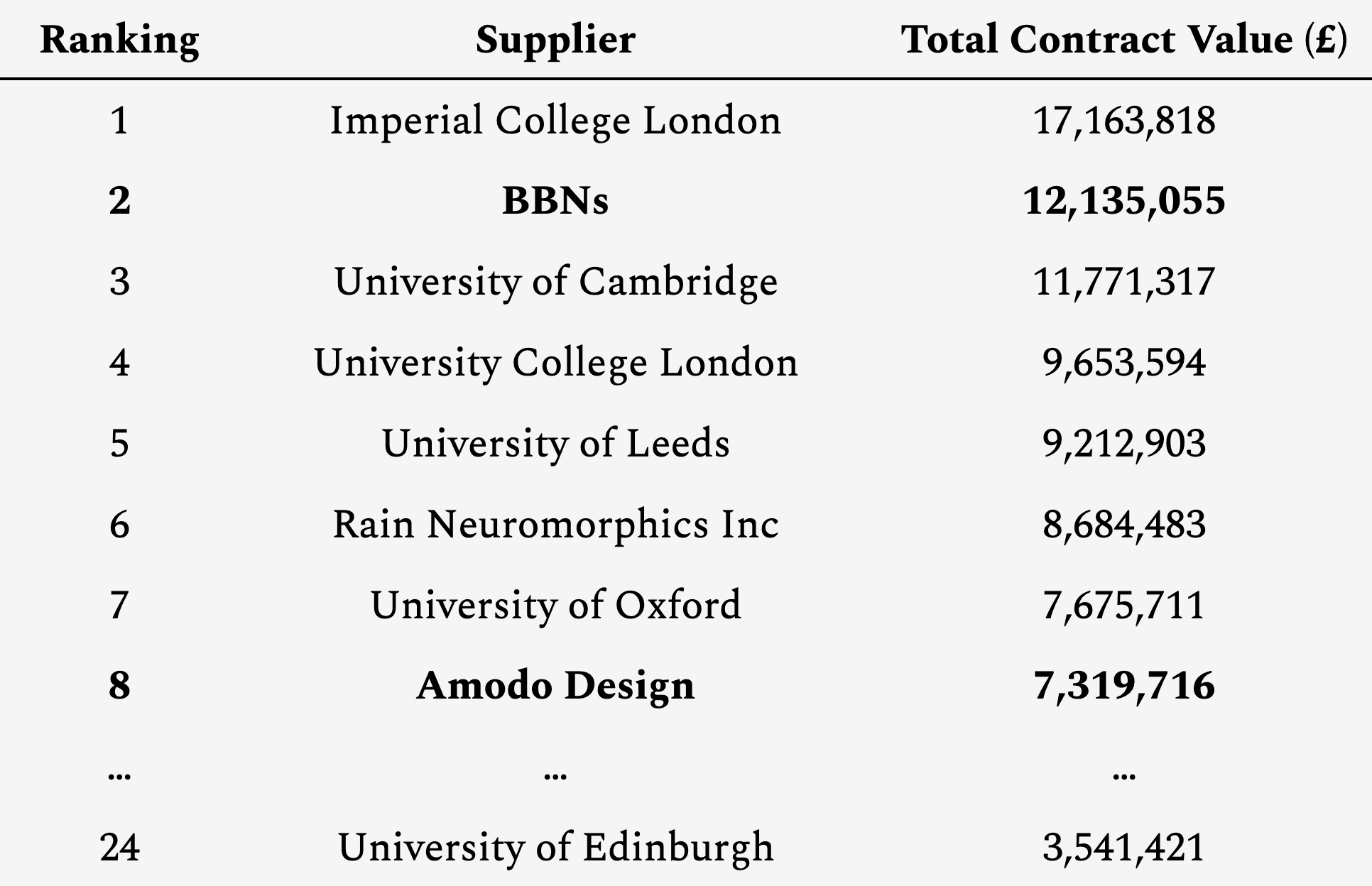
To fulfill their technical visions, FROs need contractors to carry out engineering-heavy work. Who takes these contracts? Companies like Bolt Beranek and Newman.
BBNs pursue ambitious North Star technical visions with a mix of contracts and grants. The shape of technical ambition will vary. It can range from an FRO-like technical goal, such as developing methods to cheaply map mammalian brains, to building a center of excellence in an area of R&D in which academia struggles, such as bespoke biotech instrumentation or chip building.6 Some BBNs may even pursue the speculative work necessary to help establish new subfields of research, e.g. computational law. What unites BBN founders will not be the shape of their technical visions, but their capacity to fund them by solving real problems for paying customers en route to these visions.
It is now time for Stage 2 of the [modern BBN] experiment: building a “Convergent Research for BBNs.” The BBN Fund’s objective will be simple: seed a modern ecosystem of BBNs and work to maximize their overall technical ambition.2 If successful, we will forge a new pathway for today’s best applied, ambitious researchers to pursue ambitious R&D agendas — as Convergent Research has done with FROs.